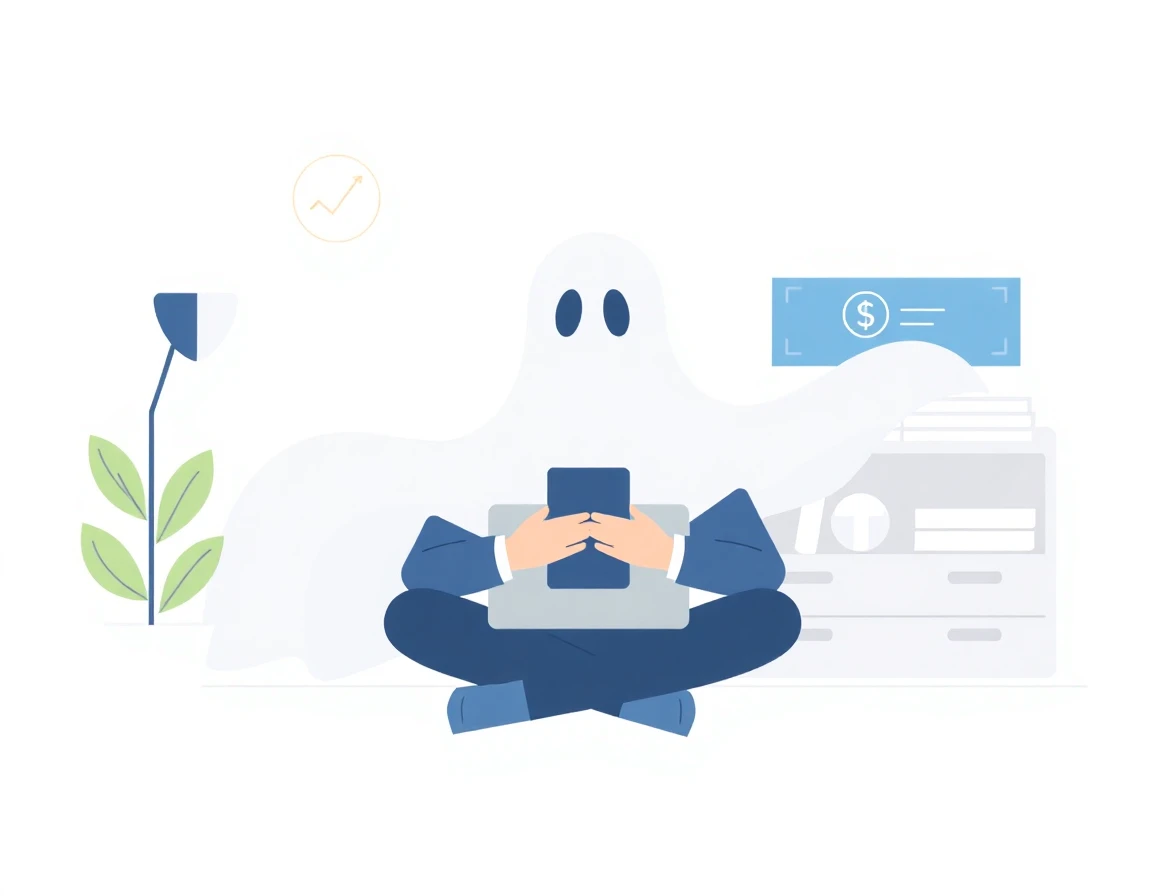
You've just finished a two-week development project. The client loved the demo. You send the invoice. Then… silence. Your emails bounce. Your calls go to voicemail. The client has completely vanished.
Client ghosting and outright non-payment is one of the most devastating experiences IT freelancers face. Unlike late payments where you at least have hope, ghosting means the client has deliberately cut off all communication after receiving your completed work. You're left with nothing—no payment, no recourse, and work you can't reclaim.
The Reality of Client Ghosting
Here's what freelancers are experiencing in tech communities like r/freelance, r/webdev, and r/programming:
"Turns out he's now blocked my number."
"His final week of completed work was never paid, despite multiple polite follow-ups and a properly issued invoice."
These aren't rare occurrences. Every freelancer community has dozens of stories about clients who disappear the moment the work is delivered, taking advantage of the fact that digital work can't be physically reclaimed like a carpenter could take back their materials.
Why Client Ghosting Hurts So Much
Complete Loss of Income
Unlike payment delays where you might eventually receive some money, ghosting often means:
- Zero payment for completed work
- Hours or weeks of effort completely wasted
- Opportunity cost of projects you turned down for this client
- Lost billable hours you can never recover
When a client ghosts with a $2,000 invoice, you don't just lose $2,000—you lose all the time you could have spent on legitimate paying clients.
You Can't Reclaim Digital Work
Physical contractors have some protection: electricians can disconnect wiring, plumbers can remove fixtures, builders can place liens on property. But as an IT freelancer:
- Code is already deployed to their servers
- Designs are already in production on their website
- Data migrations are complete and their systems are running
- Features are live and generating value for them
You literally cannot take back your work. They got everything they wanted, and you got nothing.
Legal Action is Impractical
Taking a non-paying client to court sounds good in theory, but the reality is:
- Legal fees exceed the invoice amount for most freelance projects
- Collection takes 6-12 months even in small claims court
- International clients are nearly impossible to pursue legally
- Winning a judgment doesn't guarantee payment
- Your time and energy could be better spent earning money elsewhere
Most freelancers simply write off ghosted payments as losses because fighting back costs more than the original invoice.
Emotional and Professional Damage
Beyond the financial loss, ghosting creates:
- Profound feeling of being scammed and disrespected
- Loss of confidence in future client relationships
- Hesitation to take on new projects without excessive vetting
- Burnout and cynicism about freelancing as a career
- Trust issues that make every new client seem suspicious
Many freelancers report that being ghosted once makes them paranoid about every future client interaction.
How Clients Ghost Successfully
The Pattern
Client ghosting typically follows a predictable sequence:
Phase 1: Normal Engagement
- Client seems professional and enthusiastic
- Communication is frequent and responsive
- They approve your proposal and agree to terms
- Everything feels legitimate
Phase 2: Work Delivery
- You complete and deliver the project
- Client acknowledges receipt (sometimes with praise)
- You send the invoice as agreed
- Payment is "coming soon"
Phase 3: The Fade
- Responses become slower and vaguer
- "I'm checking with accounting" becomes a pattern
- Excuses multiply: bank issues, cash flow problems, waiting on their own client payments
- Communication gaps stretch from hours to days
Phase 4: Complete Silence
- Emails stop being answered
- Phone calls go to voicemail
- Text messages show "delivered" but no response
- LinkedIn shows they're still active but ignoring you
Phase 5: Active Avoidance
- Your number is blocked
- Emails bounce or go to spam
- Social media accounts block you
- The client has effectively vanished
Why Clients Ghost
Intentional Scam
Some clients never intended to pay. They:
- Deliberately find inexperienced freelancers who won't ask for deposits
- Use fake business information
- Plan to ghost from the beginning
- Often repeat this pattern with multiple freelancers
Cash Flow Disaster
Other clients genuinely planned to pay but:
- Their own revenue collapsed
- They can't afford to pay you
- Rather than admitting financial problems, they ghost to avoid confrontation
- They're embarrassed and ashamed
Disputed Quality (Claimed)
Some clients ghost claiming the work doesn't meet expectations:
- They decide after delivery they don't like the result
- They found a cheaper alternative
- They got what they needed and invent quality concerns to avoid payment
- They use minor issues as excuse for complete non-payment
Organizational Chaos
In some cases, especially with larger companies:
- The person who hired you left the company
- No one else knows about the project
- Your invoice is lost in bureaucratic limbo
- The company doesn't deliberately ghost but effectively abandons the transaction
Traditional Solutions (That Don't Always Work)
Require Full Payment Upfront
Asking for 100% payment before starting work sounds perfect, but:
- Most clients refuse, seeing it as unreasonable
- You lose competitive bids to freelancers offering normal terms
- Legitimate clients are offended by the lack of trust
- Only works if you have strong market position
50% Deposits
Requiring half upfront is more common, but:
- You're still vulnerable for 50% of the project value
- Clients can still ghost after receiving the work
- Doesn't eliminate the problem, just reduces the loss
- Scammers know to agree to deposits then disappear anyway
Escrow Accounts
Using escrow sounds ideal, but traditional escrow:
- Most clients won't participate in manual escrow arrangements
- Escrow fees are high (3-5% of transaction value)
- Setup is complicated and requires legal agreements
- International escrow is nearly impossible for small freelance projects
Contracts and Legal Agreements
Written contracts establish obligations, but:
- Enforcement costs exceed most invoice amounts
- International clients can't be easily sued
- Winning a judgment doesn't guarantee collection
- Legal process takes months or years
Withholding Final Deliverables
Holding back source code, passwords, or final assets until payment seems smart, but:
- Clients want everything before paying
- Competitive freelancers offer full delivery
- You appear untrustworthy or difficult
- Can backfire if client disputes quality after partial delivery
The Smart Escrow Solution: Protection Before You Start
The most effective protection against ghosting is escrow-secured payments before work begins. This is how it works:
Before You Write a Single Line of Code
- You create an invoice with clear deliverables and milestones
- Client deposits full payment into neutral escrow account
- Funds are locked—neither you nor the client can access them
- You receive "Funds Secured" confirmation
- Only then do you start working
During the Project
- You work with 100% confidence payment is guaranteed
- Client can't ghost because money is already committed
- Funds remain in escrow, protected from both parties
- Client knows work will be delivered or their money is refunded
Upon Delivery
- You complete the work and submit proof of delivery
- Client has inspection window (24-72 hours) to review
- If client approves (or inspection window expires), funds automatically release
- Payment arrives in your account—no chasing, no ghosting possible
If Client Tries to Dispute
- Professional mediators review evidence from both parties
- Timeline of all communications is logged and available
- Fair resolution process based on original agreement
- Scammers can't claim "quality issues" without proof
- Rare (< 1% of transactions with clear deliverables)
Real Example: How Escrow Prevents Ghosting
Marcus is a full-stack developer hired by a new client for a $3,200 custom e-commerce integration.
Traditional approach:
- Marcus completes the work over two weeks
- Delivers the integration, client confirms it works
- Sends invoice for $3,200
- Client says "I'll send payment this week"
- Week passes, no payment
- Marcus sends three follow-up emails
- All ignored
- Marcus calls, number is blocked
- Marcus checks LinkedIn, client has blocked him there too
- Total loss: $3,200 and 80 hours of work
Escrow approach:
- Client deposits $3,200 into escrow before Marcus starts
- Marcus sees "Funds Secured: $3,200" and begins work
- Completes project, deploys integration to client's staging server
- Shares access credentials and deployment documentation
- System automatically verifies deployment is live
- Client has 48 hours to review and approve
- Client approves, payment automatically releases to Marcus
- Total ghosting risk: Zero. Payment was secured before work began.
The Future: Meister Bill's Escrow Service (Mid 2026)
Meister Bill is launching an integrated escrow payment system specifically designed to eliminate ghosting for IT freelancers. Key anti-ghosting features:
Mandatory Pre-Funding
- Clients deposit full payment before you start working
- No exceptions: If payment isn't in escrow, you don't begin
- Instant verification: You see "Funds Secured" badge in dashboard
- Cannot be withdrawn: Client can't ghost with money already committed
Automatic Release Triggers
Instead of relying on client approval, payments release automatically when verifiable milestones are met:
- GitHub integration: "PR #42 merged to main" triggers release
- Deployment verification: "Site returns HTTP 200 at production-url.com"
- File delivery: "Dropbox link shared and files confirmed present"
- API verification: "Postman collection passes all tests"
Dispute Protection
- Client must provide evidence within 48-72 hour inspection window
- Mediators review objective criteria, not subjective opinions
- Burden of proof is on the client to show work wasn't delivered
- Frivolous disputes result in automatic release to freelancer
Scammer Prevention
- Client verification required before escrow accounts are approved
- Payment method must be verified (no anonymous accounts)
- Reputation system tracks clients with dispute patterns
- Freelancers can see client payment history before accepting work
Fair Pricing
- 1% transaction fee (vs. platforms like Upwork at 20%)
- Lower than the cost of one ghosting incident
- No subscription required for basic escrow protection
- Cheaper than deposit requirements that lose you competitive bids
International Support
- Multi-currency transactions for global clients
- Automatic conversion handled by escrow system
- Cross-border legal compliance in multiple jurisdictions
- Works regardless of client location
Protecting Yourself Until Escrow Arrives
While waiting for integrated escrow solutions, protect yourself from ghosting:
1. Screen Clients Ruthlessly
Before accepting any project:
- Google the client's business name plus "scam" or "non-payment"
- Search freelance communities for mentions of the company
- Check business registration to verify legitimacy
- Request references from other contractors they've worked with
- Trust your gut if anything feels wrong
2. Verify Identity and Business
- Confirm real business address (not just a PO box)
- Verify business phone number (call it and confirm someone answers)
- Check LinkedIn profiles to ensure the person is who they claim
- Request business registration documents for larger projects
- Verify domain ownership matches the claimed business
3. Use Ironclad Contracts
- Define deliverables with objective criteria (not "good work" but "feature X passes tests Y")
- Specify payment terms explicitly including exact due dates
- Include your right to stop work if any milestone payment is late
- State jurisdiction and dispute resolution process
- Include late payment penalties of 1.5-2% per month
4. Require Milestone Payments
- Never work on a single final payment for projects over $1,000
- Break projects into 2-4 milestones with payments at each stage
- Stop work immediately if any milestone payment is late
- Don't deliver final milestone until all prior payments are received
5. Start with Small Test Projects
For new clients:
- Propose a small paid pilot project ($300-500) before committing to larger work
- Gauge their payment behavior on low-risk engagement
- Walk away if they can't pay promptly for the pilot
- Only scale up after successful payment on initial work
6. Use Payment Platforms with Invoicing
- PayPal Business with invoice tracking
- Stripe Invoicing with automatic reminders
- Wave or FreshBooks with payment links
- Make it as easy as possible for legitimate clients to pay
- Track all communication through platform for evidence
7. Document Everything
- Save all emails, Slack messages, texts related to the project
- Screenshot scope changes and approvals
- Keep proof of delivery (deployment links, file shares, screenshots)
- Maintain timeline of all communication
- This becomes evidence if you need to pursue collection
8. Set Clear Boundaries
- Don't deliver final code/designs/assets until final payment is received
- Use watermarks on design previews until payment clears
- Host websites on your own servers until final payment
- Maintain admin access until payment is complete
- Make it clear you'll revoke access if payment isn't received
9. Know When to Cut Losses
- After 14 days of non-response, assume you're being ghosted
- Send one final formal demand via certified mail if possible
- Decide if legal action is worth it (usually not for amounts under $5,000)
- Write off the loss and focus your energy on paying clients
- Don't waste months chasing someone who clearly won't pay
The Bottom Line
Client ghosting is traumatic, financially devastating, and preventable. Traditional protections offer partial security, but they don't eliminate the core vulnerability: you deliver irreversible digital work before receiving payment.
Escrow-secured payments fundamentally change this dynamic. When payment is locked in escrow before you write the first line of code, ghosting becomes impossible. The client has already committed their money. Even if they try to vanish, the payment releases automatically when you meet objective milestones.
For IT freelancers tired of wondering if each new client might disappear, the future is escrow-first. When Meister Bill's escrow service launches in mid-2026, ghosting will finally become a problem of the past.
Until then: protect yourself aggressively. Screen clients like your financial survival depends on it—because it does. Require milestone payments. Document everything. And never, ever be afraid to walk away from a client who won't agree to reasonable payment protections.
Your work has value. You deserve to be paid. And you should never again have to wonder if a client will ghost you.
About the Author: The Meister Bill team builds invoicing software specifically for developers, designers, and tech freelancers. We understand the unique challenges of IT contract work because we've lived them ourselves—including the nightmare of being ghosted by clients who vanish after receiving our work.